
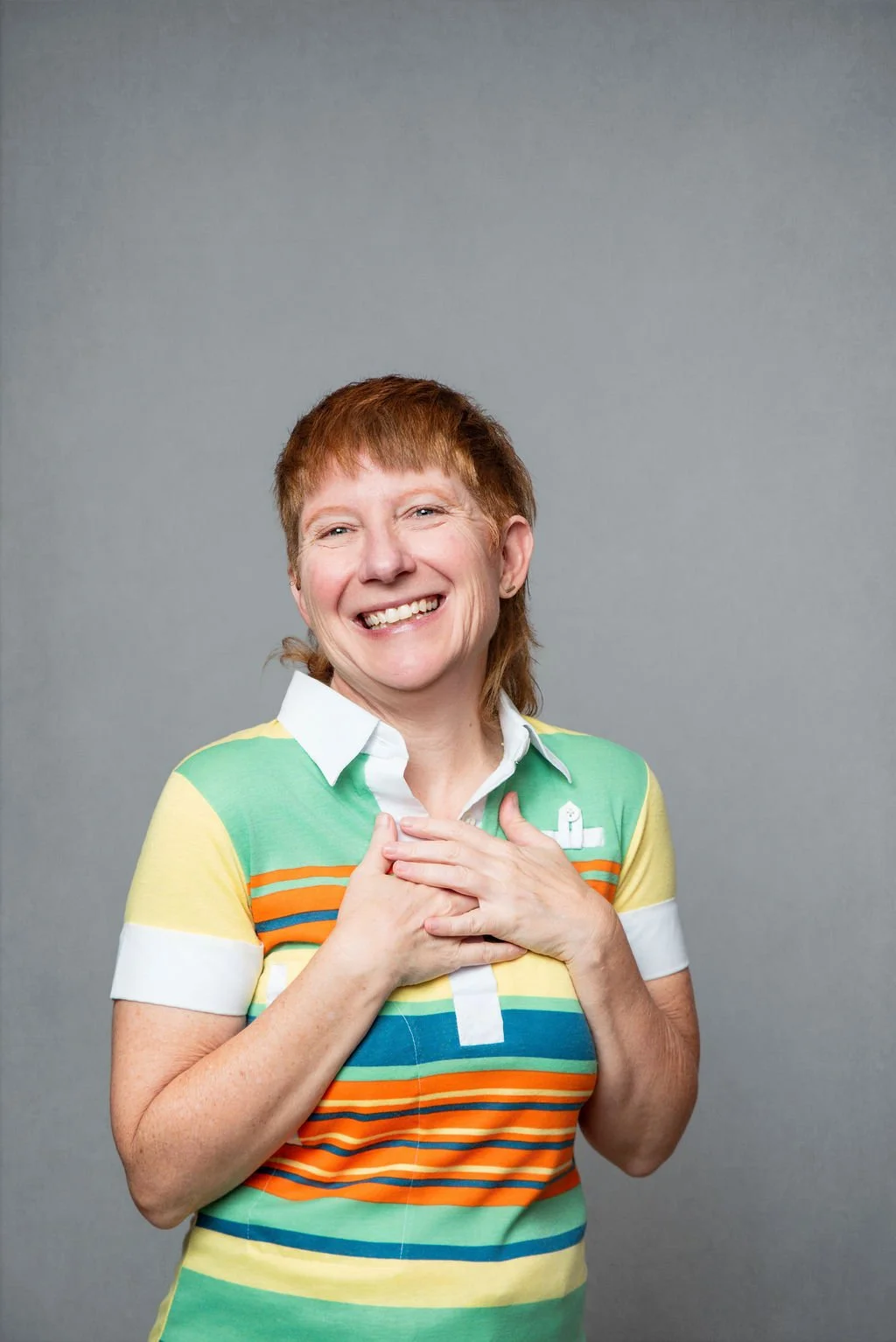
Mindy Mortlock
(She/They)
About Me:
My strategy for overcoming adversity has always been leaning into performance, innovation, and the ways the body keeps the score. That orientation, alongside healing the unimaginable, led me to develop my Somatic Dialogue and Release Framework 21 years ago.
As I’ve honed my work over the years, I have found that clients’ deepest sticking points are operating outside conscious awareness. IFS, EMDR, and 12 Steps all proved helpful previously, but the needle isn’t moving here. Clairvoyant insight and a disciplined body-based release process is needed.
Applying this method changed my life's direction. Combined with appropriate medical care, I used my framework to recover from debilitating food allergies and a nerve injury in my neck. The body is a frustrating truth serum, and with a good detective, the message can be revealed.
The majority of my clients are high achievers in the later stages of a long healing journey.
How I Work with My Clients:
Somatic Dialogue and Release is a discipline I developed to identify and resolve hidden organizing structures that remain long after the original circumstances have passed. Through a combination of hands-on assessment, intuitive perception, and somatic listening, and pattern mapping, I find where unresolved influences remain active in the system. Once revealed, these patterns can be uncoupled from authentic identity and native signal, released from the body, and recalibrated so that outcomes become aligned with intent.
I work particularly well with high achieving individuals with a mission in the world. Individuals whose primary survival strategy has been action and achievement. People who became highly effective in the world despite the burden of their original circumstance.
I create resolution for the following issues:
• Relational dysfunction that seems to happen outside your will, such as repeating dynamics. Difficulty allowing intimate connection is included here.
• Perceptual distortions such as not seeing the truth about people, good or bad.
• Persistent emotional states you could seriously do without.
• Behaviors you want to stop doing that are not addictions.
• Defeating patterns you’ve tried to change.
• Blocks around your creative passions.
• Fear of visibility issues that persist long after you’ve started playing big.